
Company News
On August 26, the first day of 2026 Formnext Asia Shenzhen, the RC100% recycled titanium alloy technology showcased at Vallaury’s booth addressed a growing industry question: how can residual materials and scrap generated from titanium alloy additive manufacturing be converted back into high‑performance powder?

Titanium alloys are finding applications in an increasing number of high‑end manufacturing scenarios. Precision structural components such as mobile phone middle frames, foldable‑display hinges, smart‑watch bodies and watch cases impose higher requirements for strength, lightweight performance and corrosion resistance, driving steady growth in titanium alloy consumption. Meanwhile, residual materials and scrap generated during support removal, equipment commissioning and powder recycling pose a practical challenge for the industry’s green transition: how these materials can be re‑integrated into high‑performance manufacturing systems.
01 From Recovery to Regeneration: A Complete Titanium‑Alloy Recycling Route
Vallaury’s self‑developed green recycling technology for titanium‑alloy powder targets the recovery and reuse of residual materials and scrap generated throughout production, adopting the closed‑loop recycling workflow of “oxygen reduction & remediation + remelting‑casting + EIGA atomization”. Scrap undergoes chemical deoxidation, rapid hot‑press consolidation and vacuum levitation melting to produce titanium ingots. After machining, the ingots are fed back into the EIGA system for re‑powdering. This is not simple screening, but a full metallurgical process. At present, the powder recycling rate reaches 100 %, with oxygen content ≤ 800 ppm. The printed‑part performance of recycled powder is comparable to that of virgin powder.

This process realizes full closed‑loop recycling from “industrial scrap” to “high‑quality titanium material” and then to “high‑performance powder”, laying a technical foundation for recycled titanium alloys to re‑enter manufacturing processes such as 3D printing and MIM.
02 For 3C Manufacturing: Recycling Delivers Value Beyond the Material Itself

Once recycled and regenerated, titanium‑alloy scrap can be converted back into high‑performance raw materials. Compared with virgin titanium alloy, this circular regeneration route cuts carbon emissions by 73.6 %, providing material‑level support for 3C brands in product carbon‑footprint accounting and green supply‑chain management. Titanium‑alloy recycling should not be limited to scrap disposal; instead, it shall become an integral part of the material manufacturing system. Every batch of material can sustain its value within the proper system, opening up new possibilities for the green upgrading of high‑end manufacturing.
Welcome to Our Booth for In‑depth Discussions
August 26‑28 | 2026 Formnext Asia Shenzhen. Industry peers are warmly welcome to visit our booth E07, Hall 15. We look forward to in‑depth exchanges covering scrap recycling routes, metal powder material performance, industrial application prospects and diverse cooperation opportunities.

Nickel-based superalloys — such as Inconel 718 and Hastelloy X — are the backbone of aerospace and power generation additive manufacturing. But their performance depends on one factor many engineers …
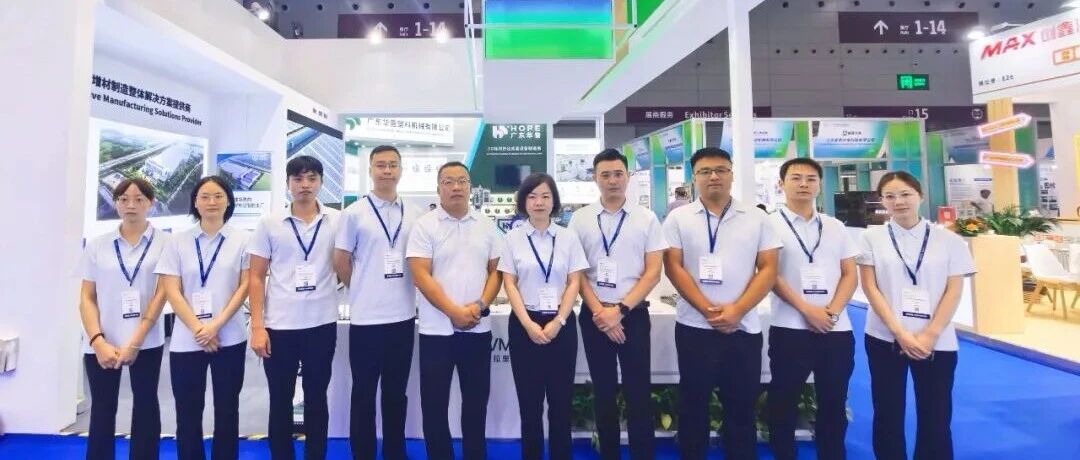
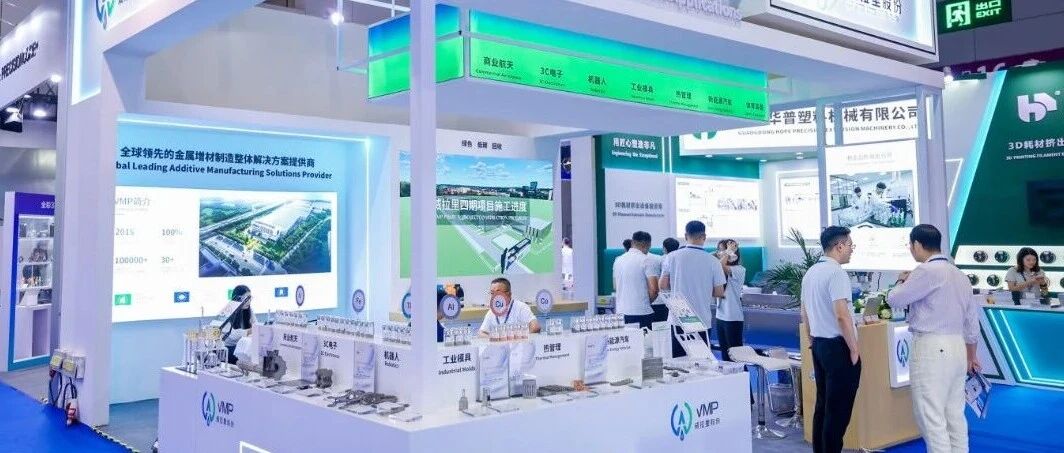
the 2026 formnext asia shenzhen exhibition concluded successfully from august 26 to 28. as a dedicated practitioner in the metal 3d printing industry, vallaury showcased its robust strengths in green s…
on august 26, the first day of 2026 formnext asia shenzhen, the rc100% recycled titanium alloy technology showcased at vallaury’s booth addressed a growing industry question: how can residual material…

Copper conducts electricity at 100% IACS and heat at 398 W/m·K — second only to silver, and about 60% higher than aluminum. Yet point a standard infrared laser at it and almost nothing happens: solid …

Recently, the research team led by Professor Shiteng Zhao, together with Professors Hongbo Guo and Ruixiao Zheng, from the School of Materials Science and Engineering, Beihang University (BUAA), has pu…

On August 29th, the 2026 Conference on Technological Innovation and High-quality Industrial Development was held. VMP Corporation, with its core technological innovation strength, was awarded the "…

Recently, the Jiangsu Provincial Department of Industry and Information Technology officially issued the "List of Advanced Smart Factories in Jiangsu Province in 2026", and VMP was recognized…


On the first day of the national college entrance examination, outside the examination site of Houji Middle School, the VMP Trade Union and the Youth League Branch set up a volunteer service station to…

from september 17 to 19, expo 3d istanbul – türkiye’s international 3d printing and additive manufacturing exhibition – was held at the istanbul international expo center. centered on core applicati…

CoCrMo is roughly 64% cobalt, 28% chromium, and 6% molybdenum. The number that most decides whether a medical implant wears well or embrittles is smaller than all three: carbon, capped at 0.35 wt%…

On June 1, VMP held the launching ceremony for the 2026 Work Safety Month.
