
Company News
CoCrMo is roughly 64% cobalt, 28% chromium, and 6% molybdenum. The number that most decides whether a medical implant wears well or embrittles is smaller than all three: carbon, capped at 0.35 wt%. In cobalt-chromium additive manufacturing, that one trace limit is where powder chemistry and the LPBF process window intersect.

The Narrow Band Behind ASTM F75
The cast CoCrMo used in orthopedic and dental implants is specified in ASTM F75 (UNS R30075) and its ISO equivalent, ISO 5832-4. The standard fixes chromium at 27.0–30.0 wt% and molybdenum at 5.0–7.0 wt%, with cobalt as the balance. The trace limits are equally binding: nickel ≤0.50%, iron ≤0.75%, silicon ≤1.0%, manganese ≤1.0%, and carbon ≤0.35%. In practice CoCrMo is a solution-strengthened alloy, not a carbide-strengthened one — carbide volume is only a few percent — yet that small carbon budget is what nucleates M₂₃C₆ (Cr₂₃C₆) carbides at cell boundaries when solidification is slow.
Chromium Passivates, Molybdenum Resists, Nickel Stays Low
Biocompatibility is a surface-chemistry problem. Chromium forms a spontaneous Cr₂O₃ passive film that isolates the bulk metal from body fluid; molybdenum strengthens that film against pitting in the chloride-rich environment. Nickel is held to a maximum of 0.50% — far below the 12–14% in 316L stainless steel — which is why CoCrMo is the standard choice for nickel-sensitive patients. The boundary is worth stating precisely: orthopedic CoCrMo still contains up to ~0.5% nickel; only dental-grade CoCr is labeled nickel-free (≤0.1%).
Why LPBF Changes the Phase Balance
Cast CoCrMo solidifies as the FCC γ phase and partially transforms to the HCP ε phase on cooling. LPBF medical implant production suppresses that transformation: cooling rates on the order of 10⁵–10⁶ K/s freeze in a predominantly FCC γ structure with a fine cellular morphology. The window is process-controlled — too little energy density leaves lack-of-fusion porosity, too much builds residual stress from steep thermal gradients — and carbon decides how much M₂₃C₆ carbide precipitates, which in turn sets the 550–800 HV hardness and wear resistance against ductility.
Medical Means Tighter Than Industrial
The same Co-28Cr-6Mo chemistry that clears an industrial print can still fail an implant. Particle size distribution, oxygen content, and the carbon trace that drives carbide formation all sit inside a narrower window for medical powder — which is why the governing stack is ASTM F75 and ISO 5832-4 for chemistry, ISO 13485 for the quality system, and the EU MDR for the finished device. Implant-grade CoCrMo powder is defined by how tightly that window is held — by Jiangsu VMP.

Figure 1: ASTM F75 (UNS R30075) composition — the three major elements (left) and the trace elements that govern biocompatibility and carbide formation (right).
By Jiangsu VMP Advanced Materials Co., Ltd. | VMP — Professional Metal Powder Solutions
For international inquiries: Ling Chen, lc@cnvilory.com

on august 26, the first day of 2026 formnext asia shenzhen, the rc100% recycled titanium alloy technology showcased at vallaury’s booth addressed a growing industry question: how can residual material…

On the first day of the national college entrance examination, outside the examination site of Houji Middle School, the VMP Trade Union and the Youth League Branch set up a volunteer service station to…

If you've ever held a metal 3D‑printed part and wondered why it looks nothing like cast or forged metal — dense, isotropic, almost wrought‑like — the answer starts with the powder. And not…

Recently, the Jiangsu Provincial Department of Industry and Information Technology officially issued the "List of Advanced Smart Factories in Jiangsu Province in 2026", and VMP was recognized…

from september 17 to 19, expo 3d istanbul – türkiye’s international 3d printing and additive manufacturing exhibition – was held at the istanbul international expo center. centered on core applicati…

On the 27th, the selection results of the 20th Jiangsu May 4th Youth Medal Collective were announced. The company’s Innovation Studio for High‑Performance Metal Powder Materials for Aerospace wa…

Copper conducts electricity at 100% IACS and heat at 398 W/m·K — second only to silver, and about 60% higher than aluminum. Yet point a standard infrared laser at it and almost nothing happens: solid …

On June 1, VMP held the launching ceremony for the 2026 Work Safety Month.

Recently, the Jiangsu Provincial Department of Industry and Information Technology released the "Public Notice of Proposed Identification of 'Three Firsts and Two New' Technology Products …
CoCrMo is roughly 64% cobalt, 28% chromium, and 6% molybdenum. The number that most decides whether a medical implant wears well or embrittles is smaller than all three: carbon, capped at 0.35 wt%…
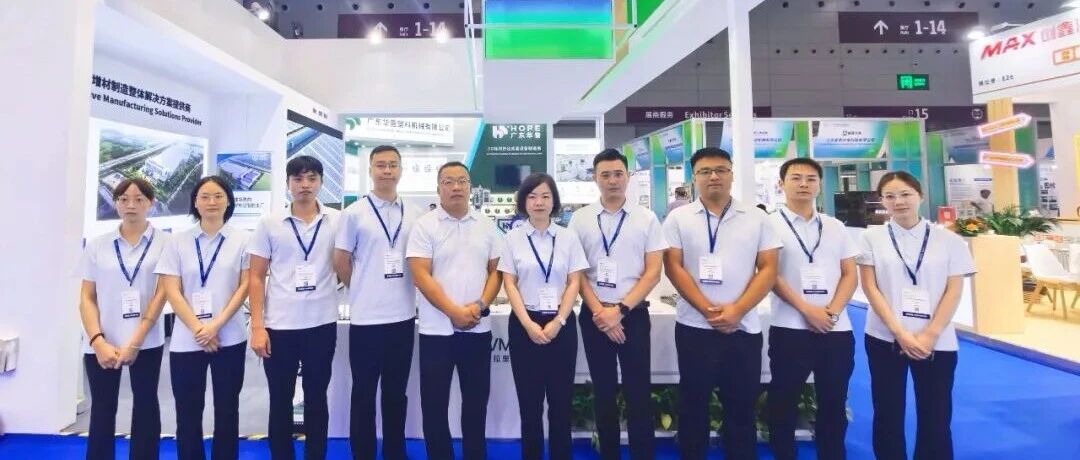
the 2026 formnext asia shenzhen exhibition concluded successfully from august 26 to 28. as a dedicated practitioner in the metal 3d printing industry, vallaury showcased its robust strengths in green s…

Recently, the research team led by Professor Shiteng Zhao, together with Professors Hongbo Guo and Ruixiao Zheng, from the School of Materials Science and Engineering, Beihang University (BUAA), has pu…
