
Company News
Nickel-based superalloys — such as Inconel 718 and Hastelloy X — are the backbone of aerospace and power generation additive manufacturing. But their performance depends on one factor many engineers overlook: the cleanliness of the powder. Contamination, particularly oxygen pickup, can turn a high-performance alloy into a source of cracks, porosity, and premature failure.
This is where Vacuum Induction Gas Atomization (VIGA) becomes critical.

Why Oxygen Control Defines Superalloy Powder Quality
Nickel-based superalloys contain reactive elements — aluminum, titanium, and in some grades, hafnium. During melting and atomization, these elements have a strong affinity for oxygen. Even a 100 ppm increase in oxygen content can reduce the fatigue life of an Inconel 718 LPBF part by 30–40%.
Oxygen in the powder manifests in three ways:
Surface oxides on individual particles, inhibiting sintering and creating lack-of-fusion defects.
Internal oxide inclusions, which act as crack initiation sites during thermal cycling.
Reduced melt pool wettability, leading to balling and poor interlayer bonding.
How VIGA Minimizes Contamination
Pre-melt vacuum
The VIGA furnace evacuates the melting chamber to 10⁻²–10⁻³ Pa before heating begins. This removes ambient oxygen and moisture. Advanced systems add a pre-heating cycle to desorb moisture from the crucible walls — a step that is easy to skip but critical for reactive alloys.
Induction melting under vacuum
Unlike EIGA, which melts a rotating electrode before gas impingement, VIGA melts the entire charge inside a sealed vacuum chamber. No atmospheric contact means no oxygen pickup during the liquid phase. For nickel alloys with 3–4% aluminum content, this sealed environment is the difference between a clean melt and one with visible dross.
High-purity atomization gas
Once the melt reaches target temperature, high-pressure argon atomizes the stream into droplets. Gas purity matters: 99.999% (5N) argon is standard for superalloy production. At this purity, residual oxygen in the gas contributes less than 5 ppm to the final powder.
Inert atmosphere throughout
After atomization, the powder cools and is classified under argon protection. Fresh particle surfaces immediately after solidification are highly reactive — exposing them to air at this stage can add 50–100 ppm of oxygen in minutes.

What Clean Superalloy Powder Looks Like
A well-executed VIGA process for nickel-based superalloy powder typically achieves:
Oxygen content: ≤ 200 ppm (100–150 ppm for premium grades)
Nitrogen: ≤ 50 ppm
Spherical particle ratio: ≥ 90%
Hall flowability: ≤ 16 s/50g (2.5 mm orifice)
These numbers translate directly to print performance: higher powder bed density, consistent melt pool behavior, and fewer rejections during CT scanning.

Recently, the Jiangsu Provincial Department of Industry and Information Technology released the "Public Notice of Proposed Identification of 'Three Firsts and Two New' Technology Products …

On the 27th, the selection results of the 20th Jiangsu May 4th Youth Medal Collective were announced. The company’s Innovation Studio for High‑Performance Metal Powder Materials for Aerospace wa…

CoCrMo is roughly 64% cobalt, 28% chromium, and 6% molybdenum. The number that most decides whether a medical implant wears well or embrittles is smaller than all three: carbon, capped at 0.35 wt%…

On June 1, VMP held the launching ceremony for the 2026 Work Safety Month.

On August 29th, the 2026 Conference on Technological Innovation and High-quality Industrial Development was held. VMP Corporation, with its core technological innovation strength, was awarded the "…

from september 17 to 19, expo 3d istanbul – türkiye’s international 3d printing and additive manufacturing exhibition – was held at the istanbul international expo center. centered on core applicati…

Recently, the Jiangsu Provincial Department of Industry and Information Technology officially issued the "List of Advanced Smart Factories in Jiangsu Province in 2026", and VMP was recognized…

Recently, the research team led by Professor Shiteng Zhao, together with Professors Hongbo Guo and Ruixiao Zheng, from the School of Materials Science and Engineering, Beihang University (BUAA), has pu…

Nickel-based superalloys — such as Inconel 718 and Hastelloy X — are the backbone of aerospace and power generation additive manufacturing. But their performance depends on one factor many engineers …
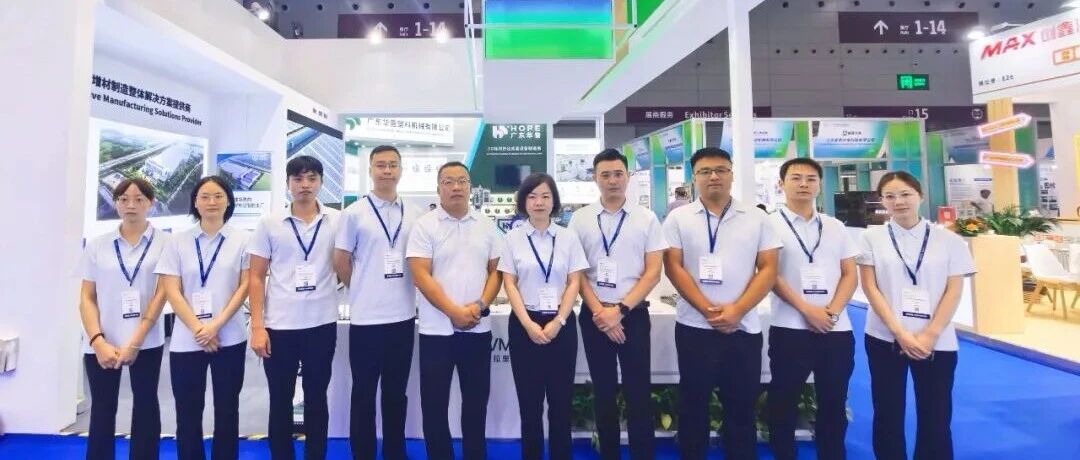
the 2026 formnext asia shenzhen exhibition concluded successfully from august 26 to 28. as a dedicated practitioner in the metal 3d printing industry, vallaury showcased its robust strengths in green s…

If you've ever held a metal 3D‑printed part and wondered why it looks nothing like cast or forged metal — dense, isotropic, almost wrought‑like — the answer starts with the powder. And not…

Recently, the Trade Union and Youth League Branch of VMP Co., Ltd. organized a voluntary blood donation campaign to respond to social initiatives and fulfill the social responsibilities of a state…
